PositioningMake CredFlow easy to explain.
I framed CredFlow around mobile business control, not a pile of accounting features.
I made CredFlow easier to understand, sell, and use.
CredFlow helped Indian SMB owners use Tally and Busy data on their phones: unpaid invoices, reminders, and cash-flow visibility. I worked on the story, onboarding, follow-up, sales material, and launches.
A new user had to understand the product, connect accounting data, and know which action mattered first. I tightened the story, onboarding, and feedback loop around that first useful action.
I framed CredFlow around mobile business control, not a pile of accounting features.
I shaped onboarding around one action: connect data, see pending money, send a reminder.
Sales objections, support questions, inactive users, and ignored features showed where the journey needed work.
Most target users already knew Tally. "Tally on Mobile" made CredFlow feel familiar: see receivables, send reminders, and check business health from a phone instead of waiting for desktop reports.
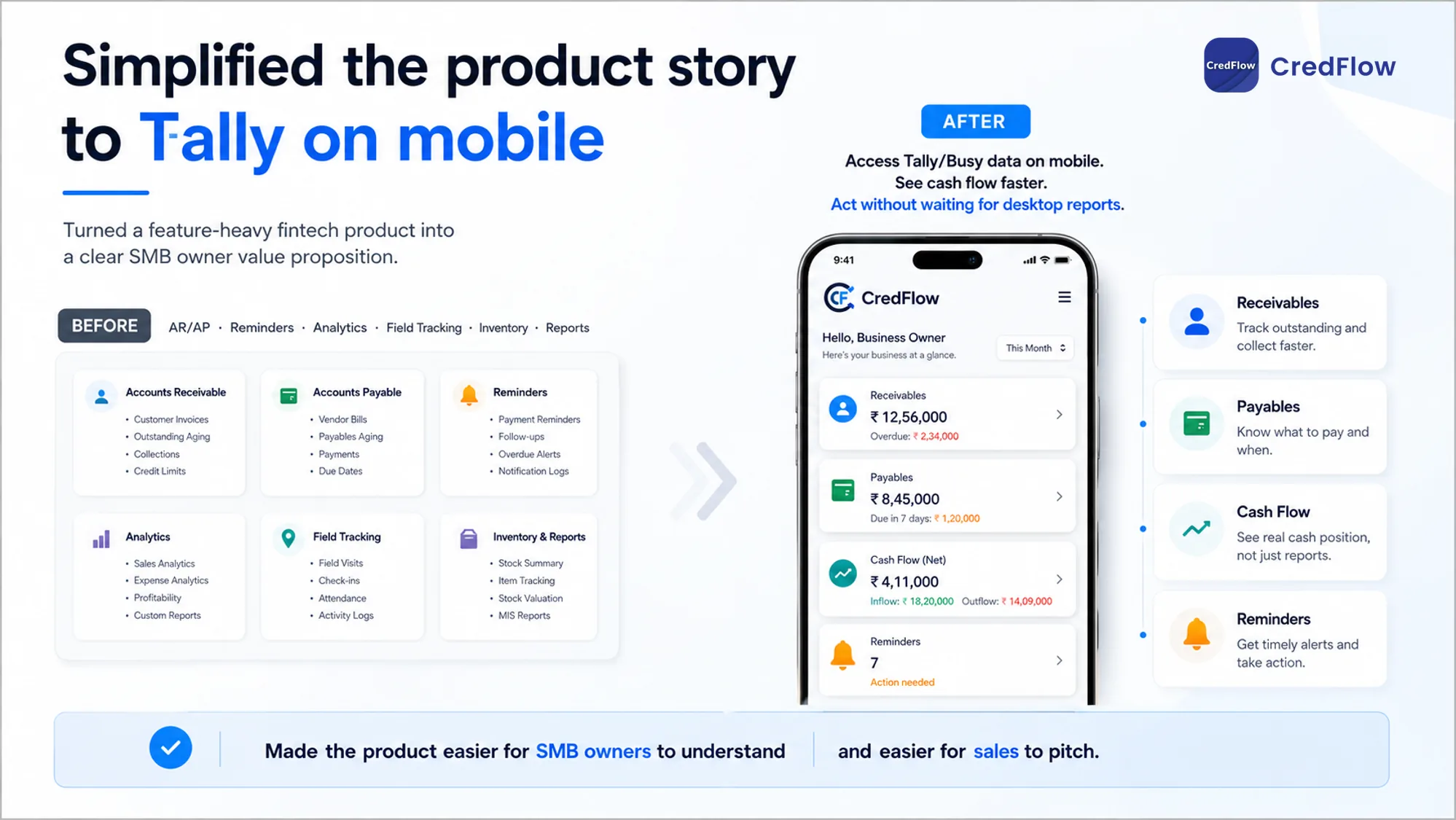
A simple hook sales, campaigns, and onboarding could all reuse.
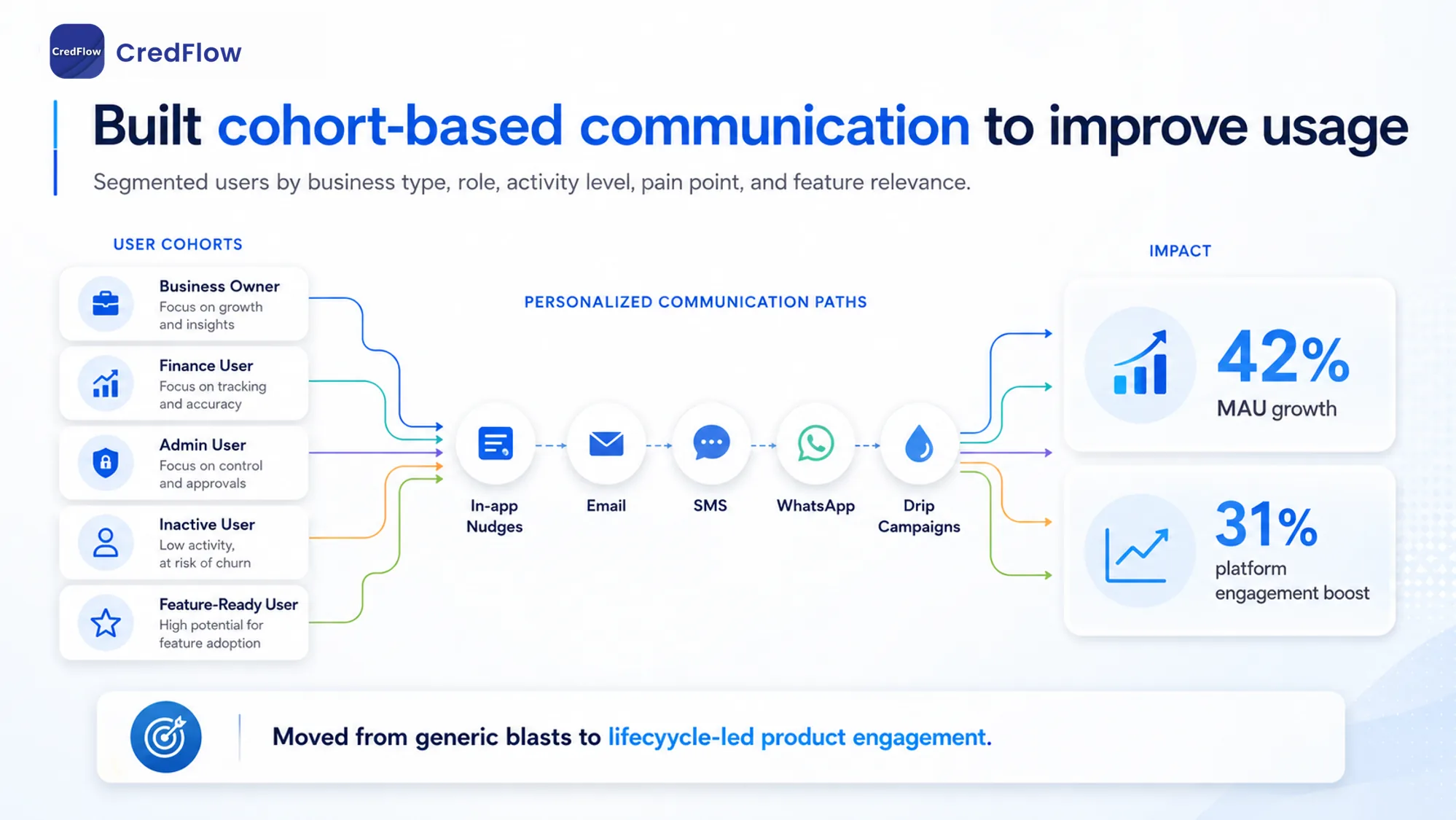
A new signup, an incomplete setup, a dormant account, an active user, and a sales-led buyer each needed different help. I built journeys around the next question blocking action.
The goal was not more reminders. It was to use behavior and channel context to explain why returning to CredFlow would help users see money, send reminders, or regain control.
The story, sales material, onboarding, follow-up, launches, and feedback all had to point users to the next useful action.
Make the value easy to grasp.
Help sales answer real objections.
Guide users to the first useful action.
Turn repeated questions into better product context.
Each artifact ties back to a decision: simplify the story, guide the first action, support sales, launch features, or use feedback better.
I turned CredFlow into a simple idea sales and SMB owners could repeat.
I made the early journey point users toward the first action that made the product feel useful.
I moved from broad reminders to messages based on user stage, behavior, and the next useful action.
I gave sales a clearer buyer story and better answers to the objections they kept hearing.
I turned user questions, sales feedback, and behavior signals into better product and marketing decisions.
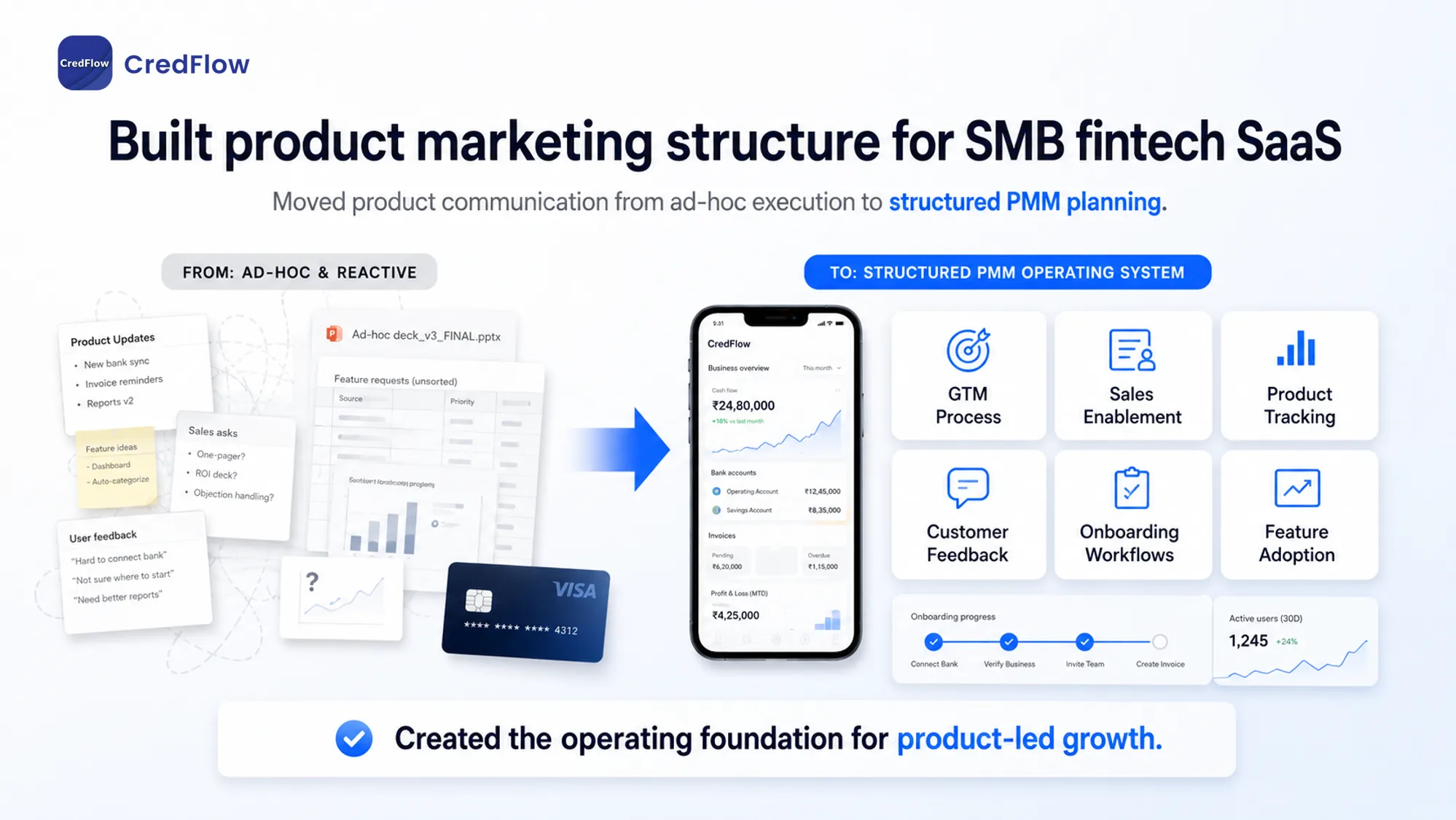
I connected positioning, launches, onboarding, follow-up, sales support, and feedback into one way of working.
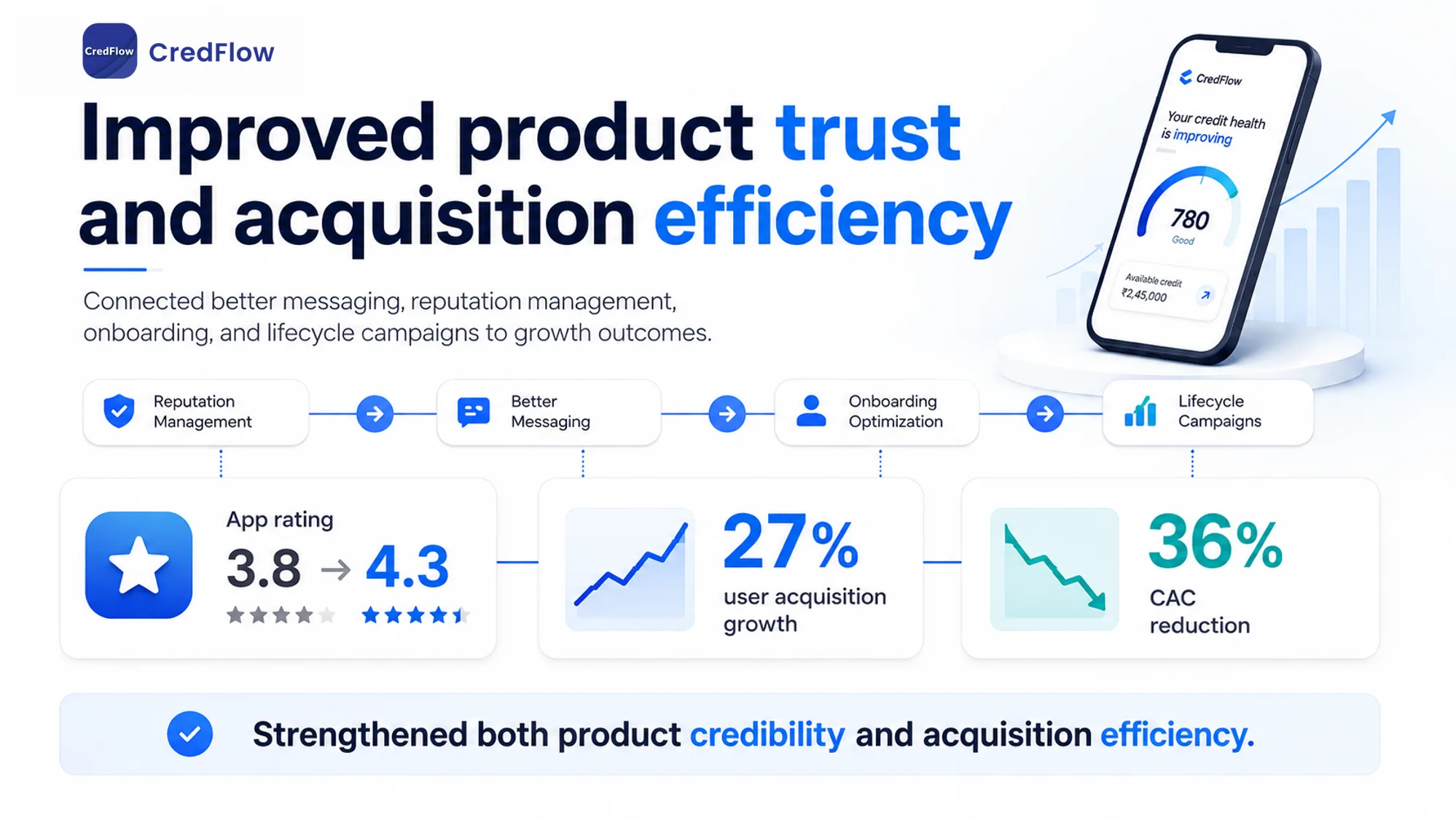
The numbers connect to clearer positioning, segmented onboarding, better follow-up, launch support, and feedback loops.
Monthly active user growth after segmented onboarding and follow-up
VerifiedPlatform engagement lift from clearer education and follow-up
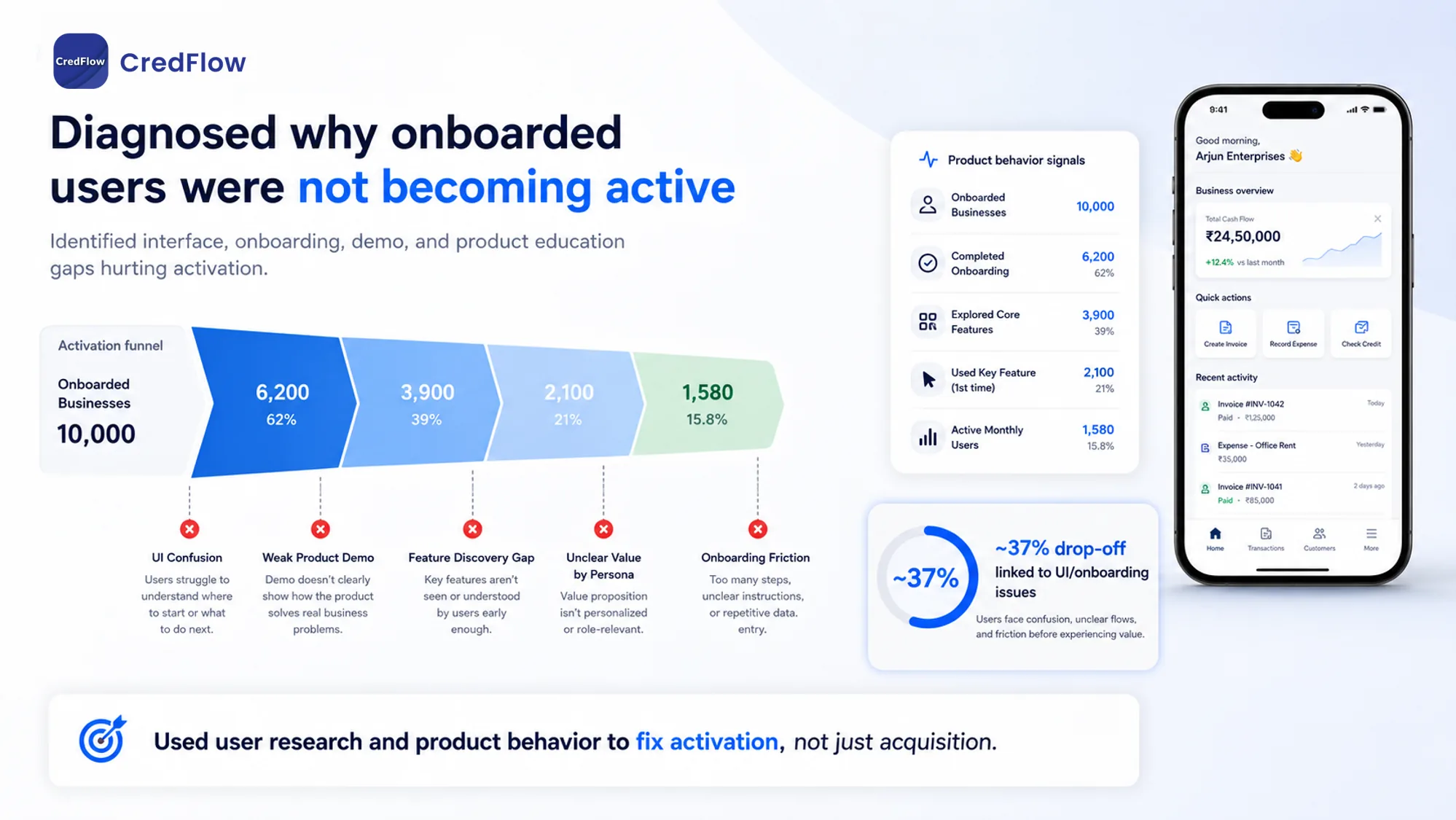
VerifiedUser drop-off diagnosed around UI and onboarding friction
VerifiedApp rating improvement after review handling and feedback loops
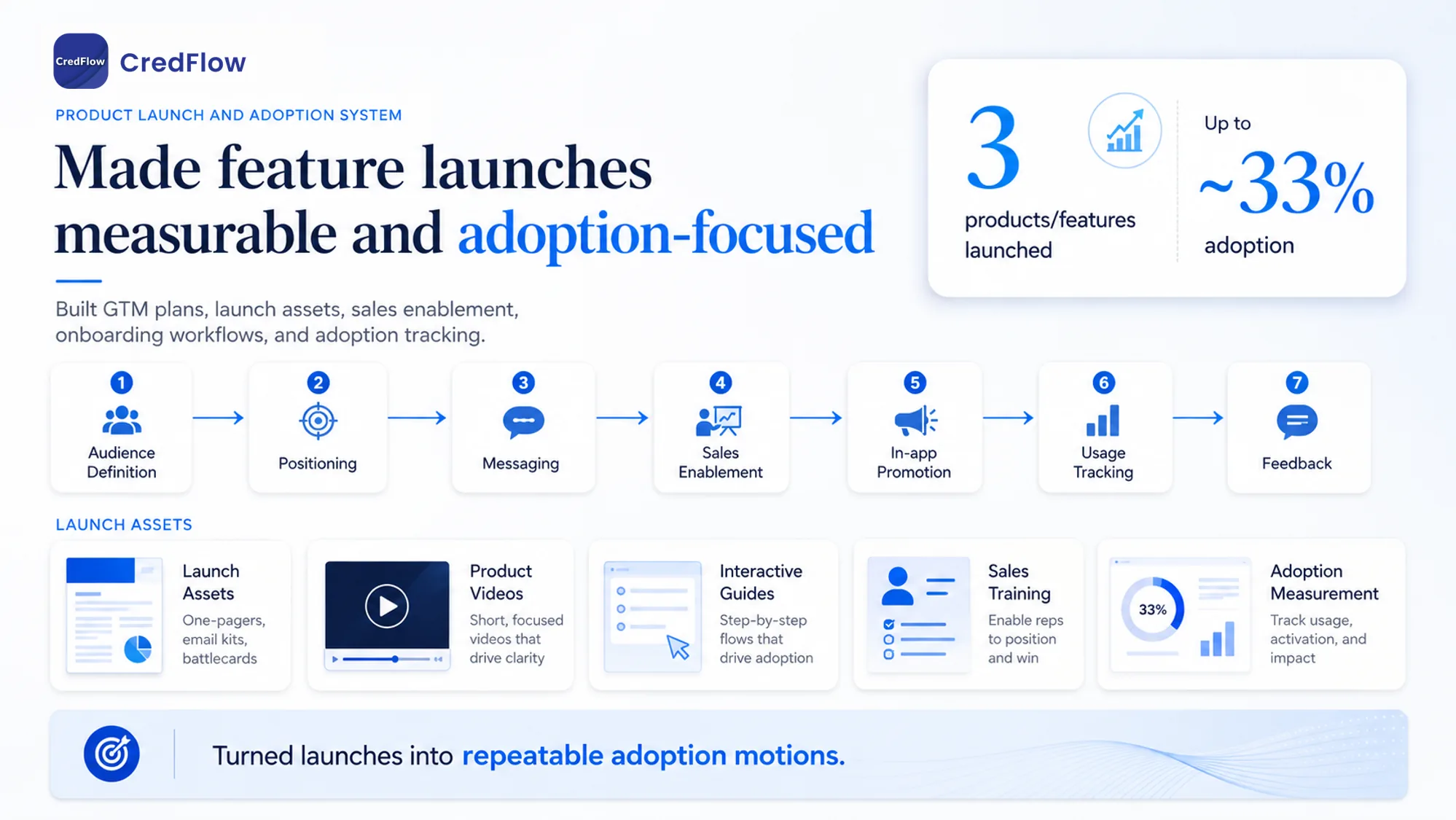
VerifiedProduct or feature launches supported with positioning and usage work
VerifiedFeature usage range after launch and follow-up work
Needs confirmationI was not just writing campaigns. I was connecting product value, buyer language, sales conversations, onboarding, and repeat usage so a useful product became easier to understand, sell, and adopt.
.webp)
CredFlow helped Indian SMB owners use Tally and Busy data on their phones: see pending money, send reminders, and manage cash flow faster.
I turned that into a clearer product story, sales material, onboarding, follow-up, and launch support.
A familiar accounting workflow became a simple mobile promise for SMB owners.
They needed to appear as the first business outcome, not another feature.
A reminder mattered when it was tied to unpaid money and the next step.
Reports made sense only after owners knew what decision they could make.
It mattered for some users, but it could not carry the first pitch.
Useful for operations teams, too much detail for the first story.
Proof worked better when it answered what is owed and what to do next.
I made the entry point simpler: start with the owner's daily accounting world, then reveal the feature range after the value was clear.
Owners could see pending money, send reminders, and manage operations from mobile.
Feature depth had to come after one clear reason to care.
The same idea had to help sales, onboarding, and follow-up.
I connected positioning, sales enablement, onboarding, follow-up, feedback, and launch support around one journey: understand the product, sign up, reach value, and keep using it.
The job was to make one idea travel from first pitch to sales conversation to actual product use.
Made Tally on Mobile the entry point before the full feature range appeared.
Turned the positioning into language sales could use in a live SMB conversation.
Used user questions, reviews, and sales objections to find what still needed clearer explanation.
Found where signed-up users stopped and made the next step clearer.
Wrote messages around what each user needed to do next.
Helped users understand what to do after signup, not just why to sign up.
One connected way to explain the product, support sales, guide signup, and learn from feedback.
The answer became the product story.
The language had to survive a real sales call.
Drop-off became a problem to diagnose, not just a number to report.
Follow-up had to point users to useful next actions.
Once the direction was clear, I used it to improve onboarding, follow-up communication, product education, launches, and sales enablement.
The work had to reduce friction: help buyers understand faster, help sales explain better, and help users know what to do next.
I studied why signed-up users were not using the product, then framed it as onboarding, education, and communication.
I mapped messages by user type, activity, pain point, and channel so follow-up pointed to a real next step.
I helped make the product story, sales material, launches, and user follow-up work together.
The real test was whether users understood the product faster, reached value sooner, and had stronger reasons to keep coming back.
The product became easier for buyers to understand, easier for sales to carry, and easier for teams to organize around.
monthly active users grew after onboarding and follow-up became more focused
At CredFlow, positioning, sales enablement, onboarding, follow-up, and feedback stopped being separate tasks. They became one connected way to help people understand, buy, use, and improve the product.